
Short answer: Spanish courses use the six levels of the Common European Framework of Reference for Languages (CEFR): A1 and A2 (basic), B1 and B2 (independent) and C1 and C2 (proficient). Most people who come to Spain for a course start somewhere between A1 and B1. You don’t have to know your level exactly before you book. The school tests you and puts you in a group that fits, so you can’t really book the “wrong” level.
Below: what each level means in everyday life in Spain, how schools find your level, a quick self-check and how the levels connect to the official DELE and SIELE certificates.
The six levels at a glance
The descriptions are a plain-language summary of the Council of Europe’s global scale.
| Level | Group | What you can do | In Spain, that looks like… |
|---|---|---|---|
| A1 | Basic | Understand and use everyday phrases, introduce yourself, answer simple questions if people speak slowly | ordering a coffee and a tostada, asking where the bus stop is |
| A2 | Basic | Handle simple, routine situations: shopping, directions, talking about your family and work | buying a train ticket at the counter, chatting with your host family about your day |
| B1 | Independent | Understand the main points of clear speech on familiar topics, cope with most travel situations, describe experiences and plans | explaining at the pharmacy what’s wrong, telling classmates about your weekend trip |
| B2 | Independent | Talk with native speakers fluently enough that neither side has to strain, follow complex discussions, argue a point of view | sorting out a problem with your landlord on the phone, following a local news report |
| C1 | Proficient | Use Spanish flexibly for social, academic and work purposes, understand long and demanding texts, including what is only implied | taking part in a work meeting, reading a novel, getting the joke at dinner |
| C2 | Proficient | Understand practically everything you hear or read and express fine shades of meaning | following a film without subtitles, regional slang included |
Why schools split levels into smaller steps
One CEFR level is a big step, too big for a single course. That’s why many schools divide each level into sub-levels such as A1.1 and A1.2, or B1.1 and B1.2. On a short course, moving up a sub-level is the realistic goal; a whole level takes longer.
Some schools also use “A0” for absolute beginners. It isn’t an official CEFR level, just a handy label for people starting from zero.
There are no strict rules about how schools group students, either. If you are a strong A2, you might join a group that has been working through A2 for three weeks already, so you start at the point where you fit best. That flexibility is a good thing: you’re placed by what you can actually do, not by a label.
How schools find your level
- Complete beginners don’t take a test. You start with a beginners’ group. At some schools beginners’ groups only start on set dates, and the booking calendar shows you which ones.
- Everyone else takes a short placement test, either online before you arrive or on your first morning, depending on the school. It often includes a short conversation with a teacher.
- The school then groups all new and current students by the results.
- If the group feels too easy or too hard, tell the school in the first days. Changing groups is usually possible, and teachers would rather move you than have you feel bored or overwhelmed.
So don’t worry about the test. It isn’t an exam you can fail; it simply puts you where you’ll learn the most. More about the first day in what to expect on a Spanish course in Spain.
Self-check: where am I roughly?
No test, no promises, just a rough guide. Go down the list and stop at the first “no”.
- Can you introduce yourself and order food and drink in Spanish? If not, you’re a beginner (A0 to A1).
- Can you talk for a few minutes about your family, your job and your town, in simple sentences? If not, you’re probably around A1.
- Can you get through a day of travelling (tickets, hotel, a problem in a shop) in Spanish? If not, you’re probably around A2.
- Can you tell a story in the past, such as what you did last summer, and say why you liked it? If not, you’re probably around A2 to B1.
- Can you follow a conversation between two Spaniards about something familiar, and join in? If not, you’re probably around B1.
- Can you discuss the news or your work in Spanish without often searching for words? If yes, you’re likely B2 or above.
Learned Spanish at school years ago? Most people in that situation remember more than they expect once they’re in Spain. The placement test will tell you.
Levels and certificates: DELE and SIELE
You don’t need a certificate to take a course. But if you want proof of your level, for a university, a job application or yourself, there are two official options.
| DELE | SIELE | |
|---|---|---|
| What it is | an official diploma of Spain’s Ministry of Education, run by Instituto Cervantes | one exam backed by Instituto Cervantes and universities in Spain, Mexico and Argentina |
| Levels | a separate exam for each level, A1 to C2; you choose which one to take | one exam with tasks from A1 to C1; your score shows your level |
| Result | pass or fail (apto / no apto) | points on a 1,000-point scale, linked to the CEFR levels |
| Valid for | no expiry | five years |
| On paper or computer | on paper, on fixed exam dates | on computer, you book a date and time |
Universities in Spain usually ask non-native speakers for B2 for degree courses (Universidad Carlos III de Madrid and Universidad de Alcalá, for example). Universidad Complutense de Madrid even states that a B2.1 certificate is not enough when B2 is required, which is where the sub-levels above matter.
Many schools run DELE and SIELE preparation courses, and some offer a university pathway for people aiming at a Spanish degree.
Two courses, two levels: what it felt like for me
When I did my first course in Granada, I was an absolute beginner and started with the very basics. Even with “only” 20 lessons a week, progress felt fast. By the middle of the second week we were playing simple games in Spanish in class, something I couldn’t have imagined on the Monday of the first week.
When I came back a year later, I was at A2 to B1. This time the conversation in class felt much more challenging from the very start, but at that level you get used to it quickly. Progress didn’t feel as fast as on my first course. Still, by the end of the two weeks I noticed that conversations outside class, with teachers, other students or my host family, came much more easily.
That’s the difference between the levels: at the start, progress is big and easy to see. Higher up it’s quieter, but it shows where it counts, in real conversations.
FAQ
I learned Spanish at school. Am I A1 or A2?
It depends on how much you remember and how long ago it was. Many people in this situation land in a higher A1 or an A2 group. The placement test decides, so there’s no need to guess.
Can I take a course if I’m a complete beginner?
Yes. Most schools have beginners’ groups. At some schools they start only on certain dates; the booking form shows the dates that work for your course.
What if I end up in the wrong group?
Tell the school in the first days. Changing groups is usually possible.
Do I need a certificate?
Only if a university, an employer or an authority asks for one. For learning, the school’s own level assessment is enough. If you need one, look at the DELE or the SIELE.
Where next?
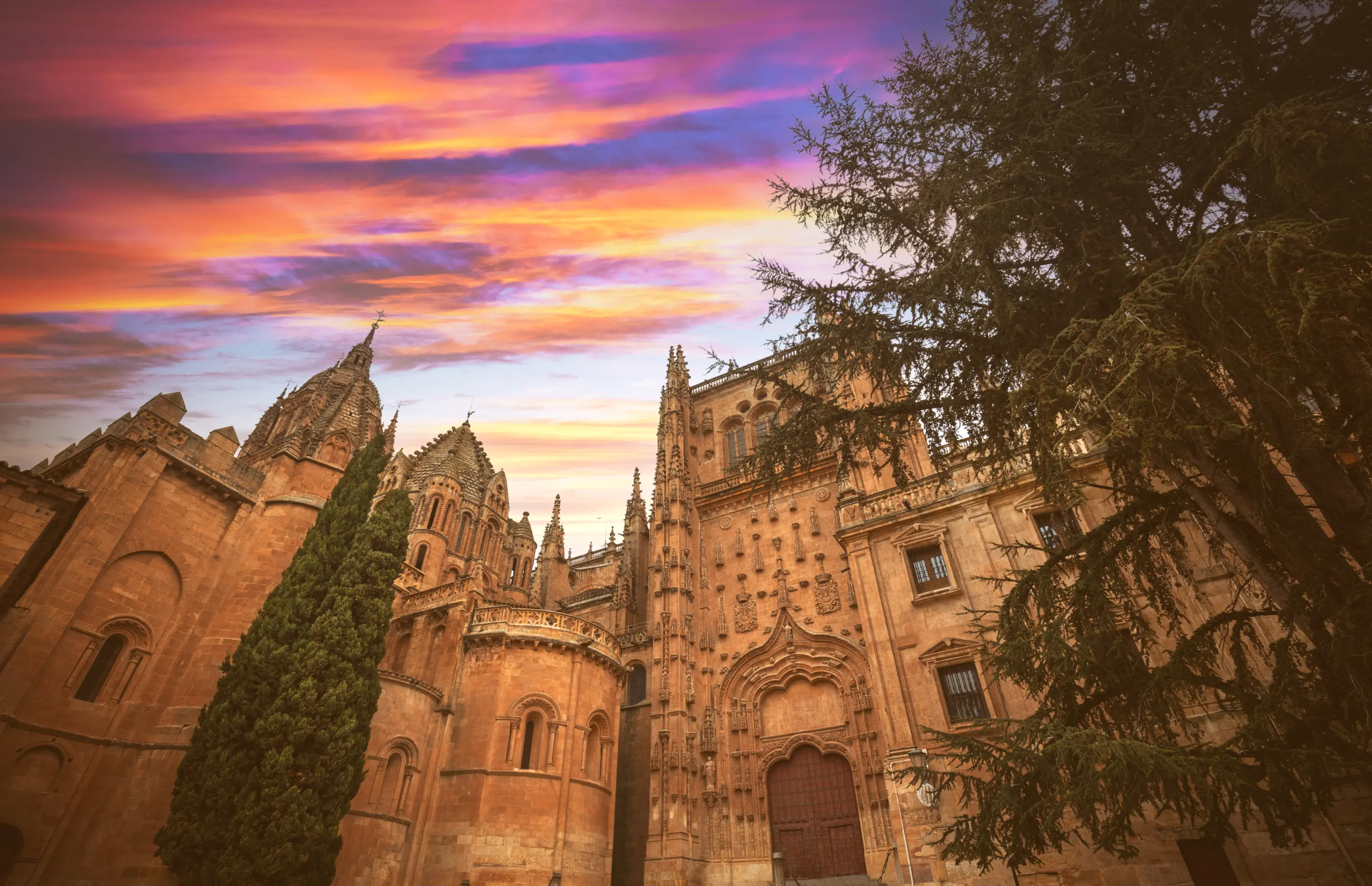
Pick a city and see which schools teach your level: Spanish courses in Málaga, learning Spanish in Valencia or Salamanca, the classic student city. New to all this? Read our beginner’s guide to learning Spanish in Spain or how to choose the right course. Still not sure what fits you? Send us a question and we’ll reply within 2 working days at the latest. You’ll find more terms in our glossary.